

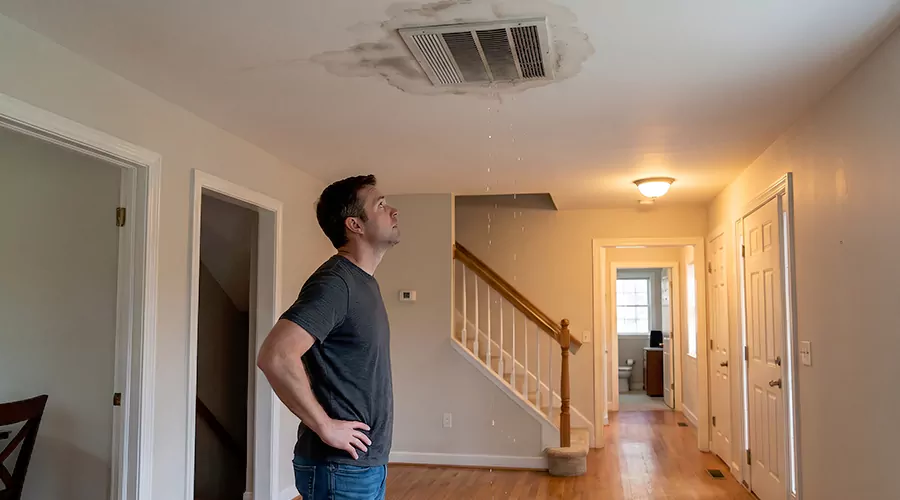
Water dripping from a ceiling AC vent is usually caused by condensation around a cold duct or register, damaged duct insulation, excess indoor humidity, or an air leak that allows humid air to reach cold surfaces. Other possible causes include a clogged condensate drain, an overflowing AC drain pan, or a roof leak near the ceiling opening.
Water leaking from an air conditioning vent should never be ignored. Even a small amount of moisture can damage drywall, stain ceilings, weaken insulation, and create conditions that support mold growth. Ceiling AC vents are especially common in homes with ductwork installed in attics. During cooling operation, these ducts carry cold air through spaces that may be much warmer and more humid than the rooms below.
When warm, humid air contacts a cold surface, condensation can form. However, identifying exactly where the water originates is important because condensation, drainage problems, and building leaks require different repairs. Professional AC vent repair can help identify the source of the leak and address damaged vent connections, insulation issues, or other airflow-related problems.
Is Water Dripping From an AC Vent Normal?
No. A properly installed and maintained air conditioning system should not routinely drip water through ceiling registers. Some moisture may form under unusual humidity conditions, but recurring water accumulation indicates that the system or surrounding building materials need attention. The U.S. department of energy explains that properly sealed and insulated ducts help reduce condensation on cold metal surfaces. If water is dripping near electrical fixtures, the ceiling is bulging, or substantial leaking is occurring, stop using the affected system when safe and arrange urgent professional inspection.
Common Causes of Water Dripping From Ceiling AC Vents
| Possible Cause | Common Warning Sign | Recommended Solution |
|---|---|---|
| Duct condensation | Water around the vent during cooling | Inspect insulation and humidity |
| Damaged duct insulation | Moisture on exposed metal | Repair insulation and vapor barrier |
| Leaking duct boot | Condensation around ceiling opening | Seal appropriate duct connections |
| High indoor humidity | Several vents feel damp | Investigate moisture control |
| Clogged condensate drain | Water near air handler or ceiling | Clear drain and inspect pan |
| Overflowing drain pan | Water stains below attic equipment | Repair drainage and overflow protection |
| Roof leak | Water appears during rain | Inspect roof and flashing |
| Crushed flexible duct | Weak airflow and cold spots | Repair or replace duct |
| Poorly sealed ceiling opening | Moist attic air reaches cold boot | Air-seal the penetration |
A technician should identify the source before replacing components or applying sealant.
1. Condensation Is Forming Around the Vent
Condensation occurs when moisture in the air contacts a surface colder than the surrounding air's dew point. During summer, the metal register or connected duct boot may become cold while humid indoor or attic air surrounds it. Water droplets can then form on the metal and eventually drip onto the ceiling or floor. A technician should check indoor humidity, supply-air temperature, duct insulation, and air leakage around the vent. Simply wiping away the water will not correct recurring condensation.
2. The Duct Insulation Is Damaged
Supply ducts in unconditioned attics normally require suitable insulation to reduce unwanted heat transfer and condensation. When insulation is missing, compressed, torn, or wet, cold duct surfaces may become exposed to humid attic air. The department of energy recommends continuous duct insulation with appropriate vapor protection in unconditioned spaces. A contractor should inspect the insulation surrounding the affected branch and register boot. Wet or seriously damaged material may require replacement rather than additional wrapping.
3. Air Is Leaking Around the Ceiling Register
A gap between the duct boot and ceiling can allow warm, humid attic air to contact cold metal. Air leakage around the duct connection may also create localized cold surfaces and condensation. The department of energy recommends sealing duct boots to ceiling materials to limit unwanted air movement between conditioned rooms and surrounding spaces. Approved sealing materials should be selected according to the gap and construction. Do not spray household foam randomly inside the duct or cover the register's intended airflow opening.
4. Indoor Humidity Is Too High
High indoor humidity increases the likelihood that moisture will condense on cold surfaces. Humidity may rise because of outdoor air infiltration, plumbing leaks, inadequate ventilation, or problems with the cooling system. The environmental protection agency recommends keeping indoor relative humidity below 60%, ideally between approximately 30% and 50% when practical. A hygrometer can help homeowners monitor humidity. If several ceiling vents are developing condensation, a broader indoor moisture problem may be involved.
5. The AC Condensate Drain Is Clogged
Air conditioners normally remove moisture from indoor air through the evaporator coil. Collected water flows into a drain pan and leaves through a condensate line. If the drain becomes blocked, water can accumulate and overflow. When the air handler is installed in an attic, leakage may travel through ceiling materials and appear near a vent. A technician should inspect the drain pan, line, trap arrangement, and any overflow safety equipment.
6. The Drain Pan Is Overflowing
A cracked, corroded, improperly positioned, or obstructed drain pan can allow water to escape. This may produce ceiling stains or dripping beneath attic-mounted equipment. An overflow shutoff switch may stop cooling when water reaches an unsafe level, depending on the installation. Do not bypass an overflow protection device to keep the air conditioner running. The drainage problem should be corrected before returning the system to normal operation.
7. A Roof Leak Is Reaching the AC Vent
Not every ceiling vent leak originates in the HVAC system. Rainwater can travel along framing or duct surfaces before appearing at a ceiling opening. If dripping occurs during heavy rain or when the air conditioner is off, investigate the roof and surrounding building materials. Roof leaks and condensation sometimes produce similar stains. A roofing contractor may need to inspect flashing, roof penetrations, and damaged shingles.
How to Fix Water Dripping From a Ceiling AC Vent?
Step 1. Protect the Surrounding Area
Place a container beneath minor dripping and protect nearby belongings when it is safe to do so. If the ceiling is bulging or water is near electrical equipment, keep clear and arrange urgent professional assistance.
Step 2. Turn Off the Cooling System
Stop cooling operation if the vent is actively dripping. Avoid continuing to run the equipment until the source of water is identified.
Step 3. Check Indoor Humidity
Use a hygrometer to determine whether the room has excessive humidity. A high reading may indicate a broader moisture-control problem.
Step 4. Inspect the Visible Register
Look for water droplets on metal surfaces, staining around the opening, or damaged ceiling materials. Do not remove wet ceiling materials or disturb suspected hazardous insulation yourself.
Step 5. Check for Drainage Problems
Look for visible water near the air handler only if the equipment is safely accessible. Do not open electrical compartments or climb through an unsafe attic.
Step 6. Arrange Duct Inspection
An HVAC technician can inspect the duct boot, insulation, exterior vapor barrier, and nearby connections.
Step 7. Repair the Actual Cause
The appropriate solution may involve restoring insulation, sealing air leaks, clearing the condensate drain, or repairing a roof leak.
Step 8. Dry and Restore Damaged Materials
Water-damaged ceiling materials should be evaluated and dried promptly. Severely damaged drywall or insulation may need replacement.
Step 9. Test the System
After repairs, verify that the equipment drains correctly and that condensation no longer develops around the vent.
Can Water From an AC Vent Cause Mold?
Yes. Repeated moisture can support mold growth on suitable materials, including drywall, paper facings, and accumulated organic debris. The EPA recommends addressing water problems promptly because moisture control is the primary method of preventing indoor mold. Cleaning visible staining without correcting the source may allow the problem to return. Substantial contamination or extensive concealed water damage may require specialized assessment.
How Can You Prevent Ceiling AC Vent Condensation?
Preventive maintenance includes keeping ducts properly insulated and sealed, maintaining condensate drainage, and controlling indoor humidity. Schedule HVAC maintenance according to the equipment manufacturer's instructions. Inspect accessible attic ducts for torn insulation and disconnected fittings. Address roof leaks and other building moisture problems promptly. A well-maintained duct system should deliver cooled air without allowing excessive moisture to collect around ceiling registers.
Conclusion
Water dripping from a ceiling AC vent commonly results from condensation, damaged duct insulation, air leakage, or AC drainage problems. Roof leaks can also cause water to appear around ceiling openings. The correct repair depends on identifying the source and correcting it before ceiling damage spreads. Professional HVAC inspection is recommended when dripping continues, insulation is wet, or an attic air handler may be leaking.